
The 5 Best Telescopes in New Zealand for 2026
Clearer Nights, Brighter Views: Choosing The Right Telescope For New Zealand Stargazing

James Johnson
With more than 12 years of experience across optics, outdoor photography and consumer technology, James Johnson reviews telescopes from a practical buyer’s perspective. His testing focuses on clear lunar views, stable mounts, ease of setup, portability and overall value for New Zealand households, families and beginner astronomy enthusiasts who want dependable viewing from backyards, balconies, campsites and dark-sky getaways.
- James@choicescope.org

Telescopes are powerful tools for exploring the night sky, giving New Zealand buyers a closer look at the Moon, bright planets, star clusters and distant deep-sky objects when conditions are clear. Whether you are buying your first telescope for a backyard, balcony, campsite, bach weekend or family trip, the right model can turn a clear evening into a memorable viewing experience.
Depending on their design and purpose, telescopes are typically divided into three main types: refractor, reflector and compound telescopes. Refractors use lenses to gather light and are popular for crisp lunar and planetary viewing; reflectors use mirrors and are often chosen for brighter deep-sky observation; compound telescopes combine elements of both designs, offering strong performance in a more compact body, usually at a higher price.
No matter whether you are a beginner, a parent choosing an educational gift, or an amateur astronomy enthusiast, selecting the right telescope can make a major difference to comfort, clarity and long-term enjoyment. For New Zealand conditions, it is also worth thinking about portability, quick setup, light pollution around towns and how easily the telescope can be taken to darker skies. Below, we explain what to look for and compare five of the most relevant options for buyers in New Zealand.
We Evaluated Telescopes Based On 10 Key Criteria
- Aperture Diameter
- Focal Length & Magnification Range
- Optical Design
- Image Clarity & Contrast
- Mount Stability
- Focus Adjustment & Ease Of Use
- Eyepiece & Accessory Quality
- Portability & Weight
- Suitability For Lunar, Planetary & Outdoor Viewing
- Overall Value For Money
We used a structured review process to identify telescopes that are practical for real New Zealand buyers rather than impressive on paper only. First, we compared key optical specifications such as aperture, focal length, lens coating and magnification range, then assessed how those specifications translate into real-world viewing of the Moon, bright planets, wildlife and distant scenery.
We also considered how each telescope performs in typical home and outdoor settings, including backyard viewing, camping, family use and areas where light pollution or fast-changing weather can affect visibility. Ease of setup was especially important, because many beginners give up when a telescope is difficult to assemble, aim or focus.
Finally, we compared the accessory package, tripod stability, portability, customer feedback and price. Many telescopes appear affordable at first but require extra eyepieces, phone adapters or carry cases later. Our goal was to highlight models that offer a better balance of clarity, usability and value for shoppers in New Zealand, especially those wanting a telescope that is enjoyable straight out of the box.
What You Should Look For
Choose The Right Telescope Type
There are three main types of telescopes: refractor, reflector and compound. Refractor telescopes are known for sharp, high-contrast views and are especially suitable for the Moon, planets and daytime scenery. Reflector telescopes often offer larger apertures for the price, making them useful for star clusters and deep-sky objects. Compound telescopes are versatile and compact, but they are usually more expensive and may require a little more experience.
A Practical Aperture Size
For beginners and family users, aperture is one of the most important specifications. A 70mm telescope can be suitable for the Moon and bright planets, while an 80mm aperture gathers more light and provides a brighter, more comfortable view without becoming too heavy or difficult to set up. Larger apertures can show more detail, but they may also increase weight, price and setup time.
Useful Focal Length & Magnification
Focal length affects both magnification and field of view. A longer focal length can provide higher magnification, while a shorter focal length usually gives a wider view. Magnification is calculated as telescope focal length divided by eyepiece focal length. For example, a 600mm telescope paired with a 10mm eyepiece provides 60X magnification before adding a Barlow lens.
A Stable, Easy-To-Adjust Tripod
A stable mount and tripod are essential. Even a clear image becomes frustrating if the telescope shakes every time you touch the focus knob. For buyers in New Zealand who may use a telescope in the backyard, on a deck or patio, at a campsite or while travelling for darker skies, an adjustable aluminium tripod and simple AZ mount can make viewing smoother, quicker and more enjoyable.
What You Should Avoid
Choosing Only The Cheapest Option
Many beginners are tempted by the lowest-priced telescope, but very cheap models often compromise on lens quality, mount stability and included accessories. This can lead to dim images, shaky viewing and a disappointing first experience.
Ignoring The Optical Specifications
When selecting a telescope, do not rely on magnification claims alone. Aperture, focal length, optical coating and mount stability are often more important for real-world clarity. A balanced specification is usually more useful than an exaggerated maximum magnification number.
Overlooking Eyepieces & Accessories
Eyepieces are central to the viewing experience. A telescope with poor eyepieces may deliver a narrow, dim or blurry view even if the main tube looks impressive. It is better to choose a package that includes practical eyepieces, a Barlow lens, a phone holder, a carry bag and other useful accessories from the start.
Buying A Telescope That Is Hard To Aim
Some telescopes are difficult to aim, focus or adjust, especially for children and first-time users. If the mount is stiff or unstable, following the Moon or locating a planet can quickly become frustrating. A simple, smooth and beginner-friendly adjustment system is a major advantage.
The 5 Best Telescopes in New Zealand for 2026
Over the past three months, we compared 18 different telescopes and telescope accessories for New Zealand buyers. Based on practical specifications, usability, accessory value and customer feedback, these five models stood out most:

Price
NZ$359
Our Rating
A+
REVIEW
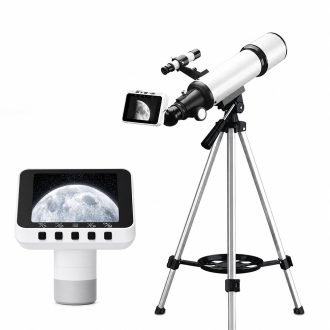
The Xenova Astronomical Telescope is our top pick because it offers the kind of balanced specification that makes sense for New Zealand households, families and beginner stargazers. Its 80mm aperture gathers more light than many smaller entry-level telescopes, helping produce brighter, clearer views of the Moon, bright planets and distant outdoor scenery. Paired with a 600mm focal length, it gives enough optical reach for detailed lunar observation while still remaining manageable for home use, backyard viewing, camping and weekend trips.
The magnification range is another major advantage. With the included 25mm and 10mm eyepieces plus a 3X Barlow lens, the telescope can cover a practical viewing range from wider star-finding views up to high-magnification observation when sky conditions allow. The 25mm eyepiece gives a wider, brighter and more comfortable field of view, which is especially helpful for beginners and for anyone who wears glasses.
Optically, the fully multi-coated lenses help maximise light transmission and reduce unwanted reflections, improving brightness, contrast and colour richness. The 45° erect-image zenith mirror also makes the telescope more versatile, allowing more natural viewing for both astronomy and daytime scenery. The 5X24 optical finderscope makes target location easier: centre the object in the crosshairs, then fine-tune through the main telescope.
We also liked the complete accessory package. The aluminium alloy tripod is adjustable and portable, the phone holder helps users capture photos and videos of lunar views, and the carry backpack makes storage and transport easier. For buyers who want a more interactive experience, the Smart Digital Edition adds an HD astronomical display screen, making it easier to share the view with children, family and friends.
Overall, the Xenova stands out because it combines an 80mm large aperture, 36X–300X practical magnification, fully multi-coated optics, optical finder, phone connectivity, carry bag and easy installation in one beginner-friendly package. For New Zealand buyers looking for a telescope that feels exciting but not overcomplicated, it offers one of the strongest value-for-money choices in this comparison.
Pros
- 80mm large aperture for brighter lunar and planetary views
- 36X–300X practical magnification range
- 600mm focal length for detailed Moon viewing
- Fully multi-coated optics for better brightness and contrast
- 25mm eyepiece gives a wide, comfortable star-finding view
- 5X24 optical finder helps lock onto targets faster
- Phone holder makes photos and videos easier to share
- Adjustable aluminium tripod and carry backpack included
- Available in Standard Visual and Smart Digital editions
Cons
- Often sells out during promotional periods
- Only available to purchase online

Price
NZ$2,207
Our Rating
A-

REVIEW
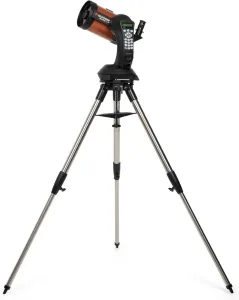
The Celestron NexStar 5SE Computerised Telescope is a well-designed Schmidt-Cassegrain type telescope, ideal for beginners and amateur astronomy enthusiasts. With its 5-inch (approximately 127mm) aperture and fully automated alignment system, it makes observing celestial objects easy and intuitive. This telescope not only boasts excellent optical performance but also combines the convenience of modern technology, making it an ideal tool for exploring the night sky.
The NexStar 5SE’s fully automated star-finding system quickly locates celestial objects, eliminating complicated manual alignment procedures, which is especially beneficial for beginners. The 5-inch primary mirror effectively gathers light, presenting clear and detailed images, particularly suitable for observing planetary details such as the bands on Jupiter and the rings of Saturn. Compared to other telescopes in its class, this model is relatively lightweight, making it easy to transport and set up on-site, perfect for observing in various locations.
While it offers many high-end features, the price may be a bit steep for beginners. In areas with significant light pollution, overall performance may be impacted, especially during deep space observations. Although the quality of the telescope itself is excellent, some users feel that accessories (such as additional eyepieces and filters) need to be purchased separately.
The Celestron NexStar 5SE is a powerful and user-friendly astronomical telescope, suitable for those looking to easily enter the world of astronomy. Its automatic star-finding capability and high-quality optical system make it stand out among similar products, appealing to passionate beginners and amateur enthusiasts. While its price may be relatively high, the performance and portability of the NexStar 5SE are certainly worth the investment for users seeking deeper astronomical exploration.
Pros
- Automatic star-finding feature
- Excellent image quality
- Good portability
- Good upgrade potential
- User-friendly control system
Cons
- Expensive for beginners
- Requires time to learn properly
- Sensitive to weather and viewing conditions
- Some accessories cost extra

Price
NZ$1,580
Our Rating
B+

REVIEW
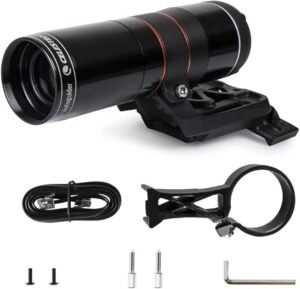
The Celestron StarSense AutoGuider (94008) is an advanced, all-in-one smart telescope accessory designed for astrophotography enthusiasts and deep-sky imaging tech-savvy users. Its design aims to provide a fully automated and hassle-free stargazing and imaging setup, featuring a high-quality 28mm (approximately 1.1-inch) 4-element optical system designed by Mark Ackermann. This accessory integrates an onboard computer-on-module and a highly sensitive Sony monochrome CMOS image sensor, making it a cutting-edge automatic solution that eliminates the traditional, complex multi-device guiding workflows.
Among similar products, the Celestron StarSense AutoGuider offers exceptional tracking and positioning efficiency. Both its automatic calibration performance and hardware integration quality exceed what one might expect given its premium positioning. The core design of this autoguider allows for a 3-minute fully automated sky alignment without any user input, utilizing patented star-pattern recognition technology to automatically orient the telescope mount. This highly integrated setup allows users to supercharge their mount’s GoTo tracking precision, ensuring deep-sky targets remain perfectly centered on small imaging sensors even during extremely long exposures.
However, compared to some lower-cost basic finderscopes, this device requires a compatible computerised Celestron mount to function, as it does not operate as a standalone manual or cross-brand accessory. The operation of such a tech-focused device requires users to have a basic understanding of modern computerised GoTo setups and software/hand control navigation. While its 28mm aperture is highly optimized with Mark Ackermann optics, it relies entirely on computerised database matching, meaning very severe light pollution or dense overcast weather can still impact its initial star-mapping speeds. Additionally, given its high-end tech integration and premium price point, it represents a significant upfront investment for casual, budget-conscious visual observers who do not engage in deep-sky astrophotography.
The Celestron StarSense AutoGuider is a quality automated imaging solution suitable for serious astrophotographers and those looking to eliminate manual alignment struggles. If you are willing to invest in an advanced automated setup to skip tedious calibration routines and capture crisp, long-exposure celestial masterpieces, the Celestron StarSense AutoGuider will be an ideal companion for your exploration of the night sky.
Pros
- 3-Minute Automatic Alignment
- Precise GoTo & Tracking
- All-in-One Design
- Premium Ackermann Optics
Cons
- High investment cost
- Limited compatibility
- Requires power and connectivity
- Weather and light conditions can limit performance

Price
NZ$760
Our Rating
B-

REVIEW
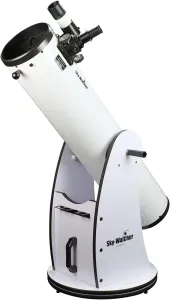
If you are looking for a telescope that can provide an exceptional cosmic viewing experience, the Sky-Watcher Classic Dobsonian Telescope (8-inch) is undoubtedly an excellent choice. This Dobsonian telescope is renowned for its 8-inch (203mm) aperture, which excels at capturing light, making it particularly suitable for observing deep-sky objects such as nebulae, star clusters, and more distant planets.
Equipped with a gravity-balancing system, adjusting the position of the telescope is easy, especially for beginners. The intuitive operation requires no complicated alignment steps. The wooden base offers excellent stability, effectively minimizing vibrations to ensure steady observations. With its larger aperture, users can observe many faint celestial objects that are invisible to the naked eye, greatly enriching the stargazing experience.
However, this telescope’s size and weight make it less convenient to move and transport, particularly for outdoor observations, requiring a large vehicle for transport. Designed as a tabletop Dobsonian telescope, it is not practical for small spaces and is best suited for individuals with a fixed observation location. While the telescope itself is easy to use, it does require significant setup and adjustment time when observing outdoors, especially for beginners. Additionally, although the provided eyepieces meet basic needs, you may need to purchase additional eyepieces for better detail and an optimal viewing experience.
Overall, the Sky-Watcher Classic Dobsonian Telescope (8-inch) is highly cost-effective due to its outstanding optical performance and reasonable price, making it an ideal choice for astronomy enthusiasts. If you are looking for a powerful tool that allows you to delve deeper into the universe, this telescope is definitely worth considering!
Pros
- Outstanding optical performance
- Easy to use once set up
- Very stable base
- Excellent field of view
Cons
- Bulky size
- Expensive
- Additional eyepieces may be needed
- Longer setup time

Price
NZ$1,370
Our Rating
B-
REVIEW
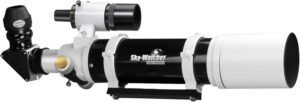
Sky-Watcher Evostar-80ED DS-PRO: A Benchmark for Deep-Sky Astrophotography
The Sky-Watcher Evostar-80ED DS-PRO is a well-designed, two-element apochromatic (APO) refractor telescope, ideal for intermediate stargazers and budding astrophotographers. Featuring a 600mm focal length (f/7.5) and 80mm aperture, this telescope has earned a stellar reputation in the astronomy community as a highly cost-effective gateway to deep-sky imaging. It not only delivers superb optical performance but also incorporates solid mechanical upgrades, making it an ideal tool for capturing high-contrast images of nebulas, star clusters, and lunar details.
The Pros
Exceptional Chromatic Aberration Control: The defining highlight of the Evostar-80ED is its optics. By utilizing premium Japanese Ohara FPL-53 extra-low dispersion (ED) glass combined with Schott glass, it effectively eliminates color fringing. Star points remain incredibly sharp and crisp right to the edge of the field, providing breathtaking, true-to-life color reproduction.
Upgraded 11:1 Dual-Speed Focuser: For high-precision astrophotography, the included 2-inch Crayford dual-speed focuser is a massive advantage. It allows for ultra-fine focusing adjustments with zero backlash, ensuring your targets are perfectly locked in.
Lightweight & Mount-Friendly: Weighing only around 2.5kg, the optical tube is exceptionally portable. It places a very low payload demand on mounts, meaning even a lightweight, budget-friendly tracking mount or star tracker can handle it with ease, saving users from expensive mount upgrades.
The Cons
Slow Native Focal Ratio: At f/7.5, the native system is relatively “slow” for faint, deep-sky astrophotography. To achieve a wider field of view and significantly faster exposure times, astrophotographers will almost certainly need to purchase an additional 0.85x focal reducer/field flattener.
Focuser Slip Under Heavy Payloads: While the Crayford focuser works beautifully for visual use and lightweight gear, some users note that when loaded with heavy professional cooled CMOS cameras or bulky DSLRs, the tension may require manual adjustment or a lock upgrade to prevent slipping at high observation angles.
Pros
- High-quality ED optics for sharp images
- Lightweight and portable
- Smooth, sturdy focuser
Cons
- Small aperture limits very faint objects
- Extra astrophotography gear required
- Mount not included
- Narrower field of view
- Possible chromatic aberration in some conditions
- Higher cost than basic beginner models
Our Top Picks For New Zealand
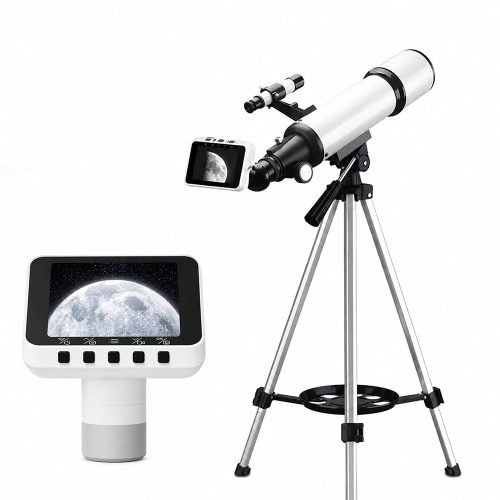

The Xenova Astronomical Telescope is our top pick for New Zealand buyers because it offers a strong balance of performance, ease of use and value. Its 80mm aperture and 600mm focal length help deliver bright, clear views of the Moon, bright planets and distant scenery, making it ideal for beginners, families, backyard viewing and weekend stargazing.
With 25mm and 10mm eyepieces plus a 3X Barlow lens, it supports a practical 36X–300X magnification range. The fully multi-coated optics improve brightness and contrast, while the 45° erect-image zenith mirror makes viewing more natural and comfortable.
It also comes with useful accessories, including an adjustable aluminium tripod, 5X24 optical finderscope, phone holder, Bluetooth remote shutter and carry backpack. For those who want an easier shared viewing experience, the Smart Digital Edition also includes an HD astronomical display screen.
Overall, the Xenova is a beginner-friendly telescope that combines clear optics, easy setup, phone connectivity and strong value, making it one of the best choices for backyard stargazing in New Zealand.